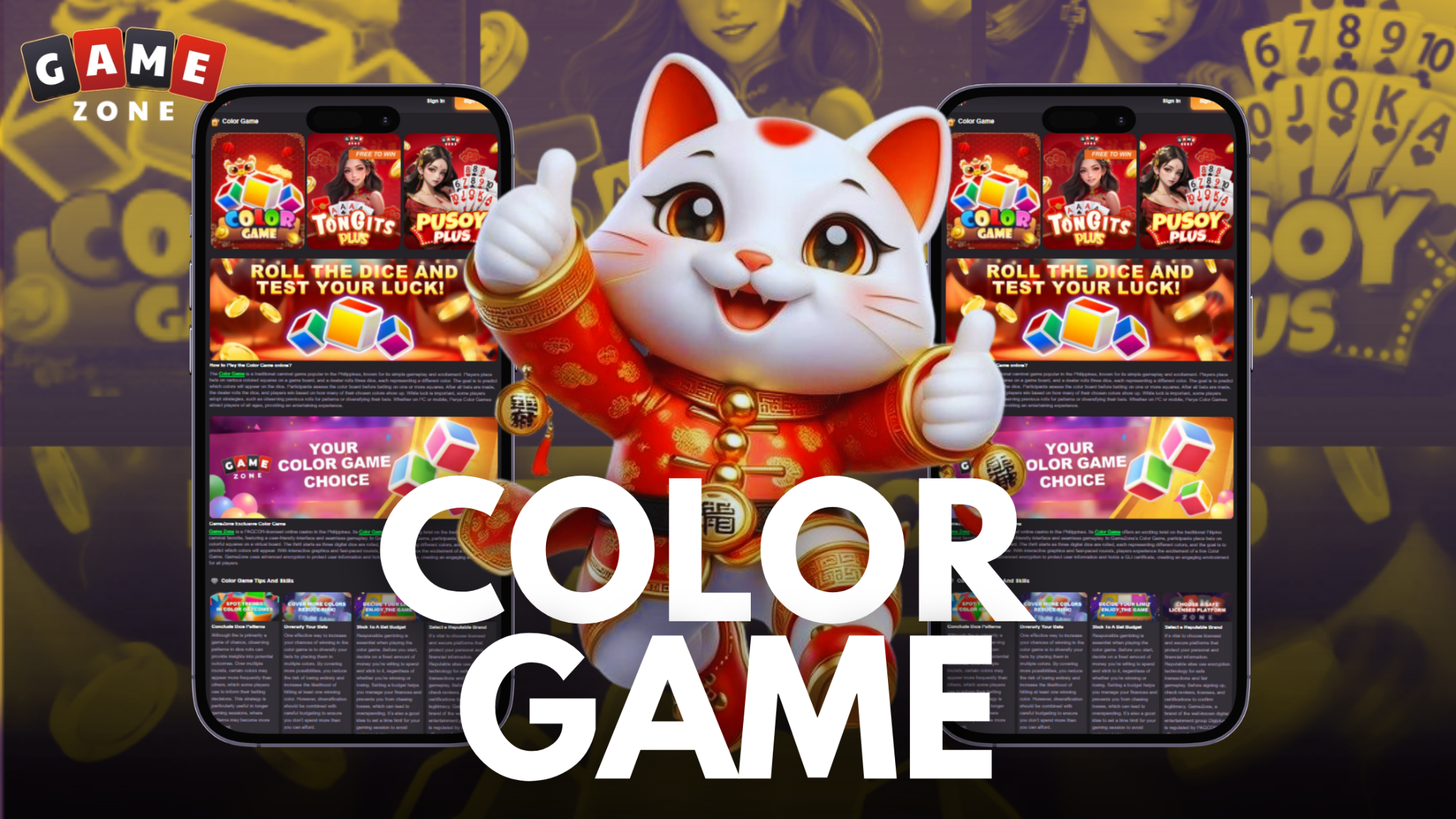
For generations, Color Game has been part of the colorful world of Filipino peryas and fiestas. Put a few bright colors, some dice, and a lively crowd together, and you have a setup that is hard to miss.
But what happens when that familiar perya attraction leaves the booth and lands on a smartphone?
The answer is more interesting than simply shrinking a traditional game onto a screen. Digital versions can use graphics, animations, automated systems, live video, or combinations of these technologies. They also have to deal with issues that a physical booth does not, such as mobile usability, accessibility, privacy, and clear digital communication.
The journey from perya booth to digital screen shows how familiar Filipino entertainment can take on a very different form without losing its recognizable identity.
What Makes Color Game So Familiar?
At its simplest, Color Game is associated with colored spaces and dice-based outcomes. In a traditional perya setting, the action happens at a physical booth, where participants can see the playing area, dice, operator, and surrounding crowd.
That physical setting does plenty of work.
The operator can explain what is happening. Players can watch the equipment directly. Spectators can react together. Even the noise and movement of the perya become part of the experience.
A digital screen has none of that built in.
Instead, the interface has to communicate almost everything through visual design. Colors, labels, animations, buttons, and status indicators become the digital equivalent of the physical cues people would normally see around a booth.
That makes Color Game a neat example of how traditional entertainment can be reimagined for modern devices.
From Colorful Booth to Pocket-Sized Screen
Moving a traditional activity into a digital environment involves a little more than pressing the “upload” button and hoping for the best.
Physical elements need digital counterparts:
- A board can become an interactive graphic.
- Dice can appear as digital animations or through a live visual presentation.
- Instructions can become on-screen labels.
- Physical activity can be represented through software or real-time video.
- The booth environment can be replaced by a mobile or browser interface.
The result does not necessarily reproduce the original experience exactly. Instead, it adapts familiar elements to a different environment.
This distinction matters because not every digital implementation works the same way. Some systems may use automated technology, while others may incorporate live video or real-time presentation.
For users, the important question is whether the platform clearly explains what they are seeing. A live presentation should not be casually described as automated, and an automated system should not be presented as a live physical event. Even dice deserve accurate descriptions.
How Does Digital Color Game Technology Work?
Behind a relatively simple interface can be several layers of technology.
At a basic level, a digital Color Game needs systems that deliver the interface, process relevant game activity, and display the resulting information. The exact setup depends on the platform.
Possible components include:
- Digital graphics for representing colors, dice, and other visual elements
- Animation for showing actions or outcomes
- Automated systems for processing digital activity
- Live video for real-time visual presentation where applicable
- Responsive technology for adapting the interface to different screens
- Backend systems that handle data and connect the service to the user interface
Most users will never see these technical layers directly. What they encounter is the front end.
That screen should make the important information easy to understand. Users should be able to identify the colors, recognize relevant game states, understand when an activity starts or ends, and distinguish interactive controls from decorative elements.
Good technology does not need to shout about how clever it is. It simply makes the experience easier to understand.
Why Mobile Design Can Make or Break the Experience
Smartphones have changed how Filipinos access digital entertainment, making mobile design especially important.
A layout that looks perfectly comfortable on a desktop can become a cramped mess on a smaller screen. Tiny text, oversized graphics, and buttons packed together can turn a simple interface into an accidental puzzle.
A mobile-friendly Color Game interface should prioritize:
- Readable text so users do not need to zoom constantly.
- Clear visual hierarchy so important information stands out.
- Responsive layouts that adapt to different screen sizes.
- Touch-friendly controls with enough space between interactive elements.
- Simple navigation that does not require users to hunt for basic functions.
- Consistent visual cues so colors, labels, icons, and animations mean what users expect them to mean.
These are standard principles of good mobile UX, but they become particularly important for visually driven entertainment.
Can Color Game Be More Accessible?
Here is where the reliance on color becomes something designers need to think about.
A digital interface should not use color as its only method of communicating important information. The World Wide Web Consortium’s WCAG 2.2 guidance recommends using additional visual cues, including text and other distinctions, rather than relying on color alone.
Useful accessibility measures include:
- Text labels beside colored elements
- Icons or symbols
- Patterns and shapes
- Strong contrast
- Clearly defined selected and unselected states
- Visual indicators that remain understandable without color alone
WCAG 2.2 also provides contrast guidance, including a 4.5:1 minimum contrast ratio for normal-sized text in applicable situations and 3:1 for large text.
These practices can help more than people with color-vision deficiencies. Strong contrast and clear visual cues can make a mobile interface easier to read outdoors, on smaller displays, or under less-than-perfect viewing conditions.
In other words, accessibility is not about making a screen less colorful. It is about making sure the colors are not doing all the heavy lifting.
What Does Digital Color Game Say About Filipino Entertainment?
The move from perya booths to digital screens reflects a much bigger change in Filipino entertainment.
Traditional peryas bring people together in one physical location. The booth, operator, spectators, surrounding attractions, and atmosphere all contribute to the experience.
Digital platforms separate those elements.
A user can encounter a familiar entertainment format through an individual screen rather than at a crowded fiesta or perya. The result is therefore not simply a digital copy of the traditional experience. It is a reinterpretation shaped by modern technology.
That shift is particularly interesting because Color Game already has such a strong visual identity. The colors and dice can remain recognizable even when the environment around them changes completely.
What Should Users Check Before Using an Online Platform?
A colorful interface can tell users what something looks like. It cannot, by itself, tell them whether the service handles their information responsibly.
Before using an unfamiliar online gaming platform, users should consider:
- Privacy: Review what personal information is collected and how it is used.
- Security: Use strong, unique passwords and keep account credentials private.
- Permissions: Check whether an application requests access to information or device features that seem unnecessary.
- Age requirements: Follow applicable age and eligibility rules.
- Terms and policies: Look for clearly presented terms of use and privacy information.
- Regulatory information: Check for relevant licensing or regulatory disclosures where applicable.
- Responsible use: Treat digital gaming as entertainment and maintain sensible limits.
These checks may not be as exciting as watching a colorful screen, but digital literacy is part of using digital entertainment responsibly.
Where Could Color Game Go Next?
The evolution of Color Game is ultimately a story about adaptation.
A familiar perya format can move onto websites, smartphones, and other connected devices while retaining recognizable elements such as colors and dice. At the same time, digital technology introduces new expectations around usability, accessibility, privacy, and transparency.
The interesting part is not simply that a traditional Filipino entertainment format can appear on a screen. It is how much the experience changes once technology becomes the environment.
The perya booth may be physical, noisy, and surrounded by people. The digital version can be compact, interactive, and designed around a single screen.
Same familiar idea, very different stage.
Frequently Asked Questions
What is Color Game?
Color Game is a traditional Filipino perya-style game associated with colored spaces and dice-based outcomes. Digital versions can adapt these familiar elements through graphics, animation, live presentation, or automated systems.
How does digital Color Game differ from the traditional version?
The traditional format takes place at a physical booth with tangible equipment, an operator, and a shared environment. Digital versions recreate or reinterpret the experience through a website, application, or other electronic interface.
Can Color Game be used on mobile devices?
Digital versions may be designed for smartphones and other mobile devices. A good mobile interface should provide readable text, responsive layouts, touch-friendly controls, and straightforward navigation.
How can Color Game interfaces improve accessibility?
Designers can combine colors with text, icons, shapes, patterns, and sufficient contrast. This prevents color from becoming the only way users receive important information.
What should users check before using an online gaming platform?
Users should review privacy policies, security practices, permissions, age requirements, terms of use, responsible-use information, and applicable regulatory disclosures. In the Philippines, personal-data processing is also covered by the Data Privacy Act and related rules.

